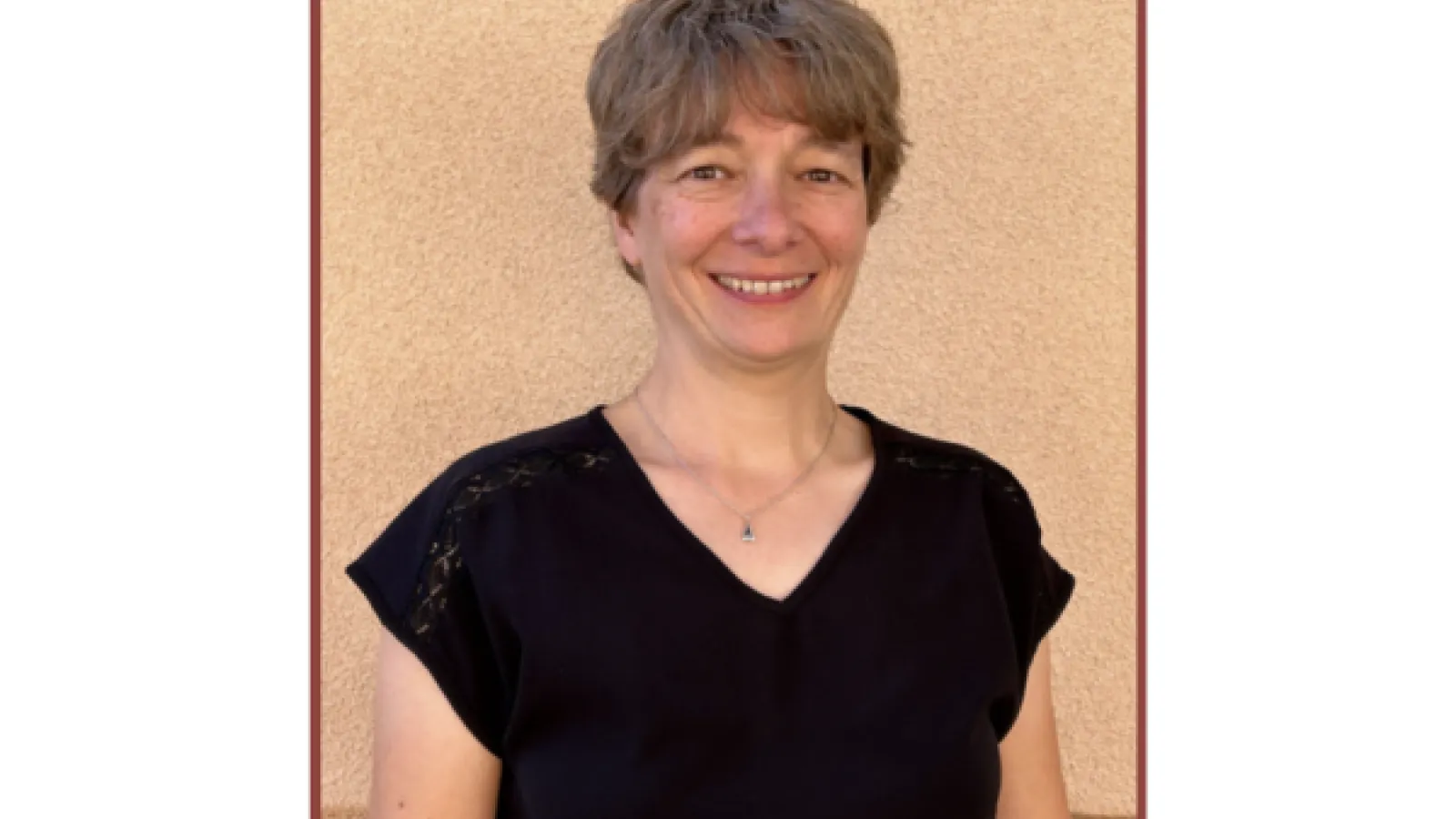
Nuclear Physics Seminar: Carla Fröhlich, NCSU
Supernovae: From nuclei to photons
Event Details:
- Date: February 3, 2026
- Time: 2:00 - 3:00 PM
- Location: 4138 Physics Research Building
- Faculty Host: Yuri Kovchegov
Abstract
The origin of the elements is a fundamental question that has fascinated humans since the earliest days. Unprecedented observational, experimental, and computational facilities have provided a wealth of data, allowing us to tackle the question of the origin of elements to ever increasing depth and details. Supernovae are some of the earliest sources of element synthesis. Originating from the gravitational collapse of massive stars they are rich multi-physics laboratories. They emit copious quantities of neutrinos, they put on a bright electromagnetic display, and they are a birthplace of neutron stars and black holes. However, numerical simulations remain a challenging and computationally expensive problem, affecting the prediction of observables such as nuclei or lightcurves. In this talk, I will present highlights from my research group on the modeling of supernovae, compact object mergers, their nucleosynthesis, and the associated multi-messenger predictions from electromagnetic signals, to neutrinos and gravitational waves.
Bio
Carla Fröhlich is a nuclear astrophysicist. Early in her career, she discovered a new nucleosynthesis process, the neutrino p-process, which for the first time allowed to explain some observed abundances in metal-poor stars. Her current research is centered around explosive events such as supernovae and compact binary mergers. She works on nucleosynthesis predictions, lightcurves, neutrinos, and gravitational waves using numerical simulations. She is an Alumni Distinguished Undergraduate Professor and University Faculty Scholar in the Department of Physics at North Carolina State University. Additionally, she is the found of the "Bridges to Germany" workshop for new faculty in Germany.