BioPhysics

About
The OSU Biophysics group aims to address problems of biological significance using Physics methods.
Cutting edge experimental methods enable highly quantitative measurements on biological systems, while computational methods provide the opportunity to explore the consequences of diverse microscopic models of biological systems.
Expertise
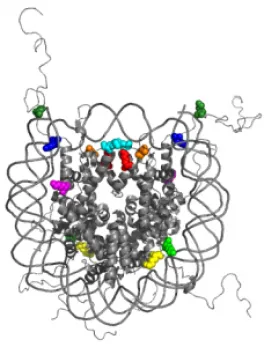
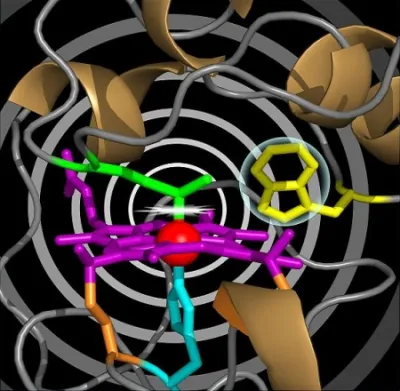
The expertise of the group covers processes on all length and time scales of Biology from femtosecond electron or proton transfer processes in enzymes over RNA and chromatin structure, membrane invaginations, cell movement, mechanobiology of development, the behavior of the immune system, all the way to ecological questions.
Tools
The range of physical tools is similarly broad including single molecule spectroscopy, superresolution imaging, femtosecond spectroscopy, magnetic manipulation, DNA nanotechnology, statistical physics, genomics, differential equation models, and machine learning.
The experimental labs not only characterize biological samples, but have the expertise to prepare their own samples as well.
Interdisciplinary Programs
The Biophysics Group is highly interdisciplinary. There is close collaboration between experimentalists and theorists as well as between the OSU Biophysics group in general and colleagues across campus in the colleges of Arts & Sciences, Medicine, and Engineering.
Faculty in the Biophysics Group are members and play leading roles in a number interdisciplinary programs and centers including:
- The Biophysics Graduate Program
- The Ohio State Biochemistry Graduate Program
- NIH T32 training grants (Molecular Biophysics Training Program, and the Cellular, Molecular, and Biochemical Sciences Program)
- The Center for RNA Biology
- The OSU Nationwide Epigenetics Group
- The Comprehensive Cancer Center
- The Center for Cancer Engineering
The group is funded by NIH, NSF, DOE and industry, and has received a number of awards including NSF CAREER awards, NIH MIRA awards, the Packard award, and APS fellows.
The group has a strong publication record including publications in high impact journals such as Science, Nature Communications, Nature Methods, PNAS, JACS, and Physical Review Letters.
Many former trainees of the group have gone on to great academic (Princeton University, Mayo Clinic, Oregon State University, Xavier University, Indiana University East Richmond, and many international institutions) and industry positions (e.g., Illumina, Intel, Chromologic, Battelle, Google, Twitter, Indeed).
Overall, the Biophysics Group provides a vibrant intellectual environment to answer the questions of modern Biology with physical methods.
Faculty
Ralf Bundschuh, Professor and Chair
Research Group
PhD, Universität Potsdam, 1996
RNA structure: statistical mechanics and quantitative prediction
RNA editing
Biological sequence database searches
Biomolecules
Bioinformatics
C. Jayaprakash, Emeritus
Professional Work
PhD, University of Illinois, Urbana, 1979
Genetic regulatory systems
Modeling of the adaptive immune system in humans
Nonlinear ecological dynamics
Comert Kural, Associate Professor
Lab Group
PhD, University of Illinois, Urbana-Champaign, 2007
Experimental biophysics and computational biology
Three-dimensional cell and tissue imaging
Dynamics of clarthrin-mediated endocytosis in living organisms
Tissue morphogenesis, cell migration and signaling
Michael Poirier, Professor
Lab Group
PhD, University of Illinois, Chicago, 2001
Chromatin and chromosome structure and function
Chromatin remodeling
Mechanisms of molecular machines
Bacterial population dynamics and diversity