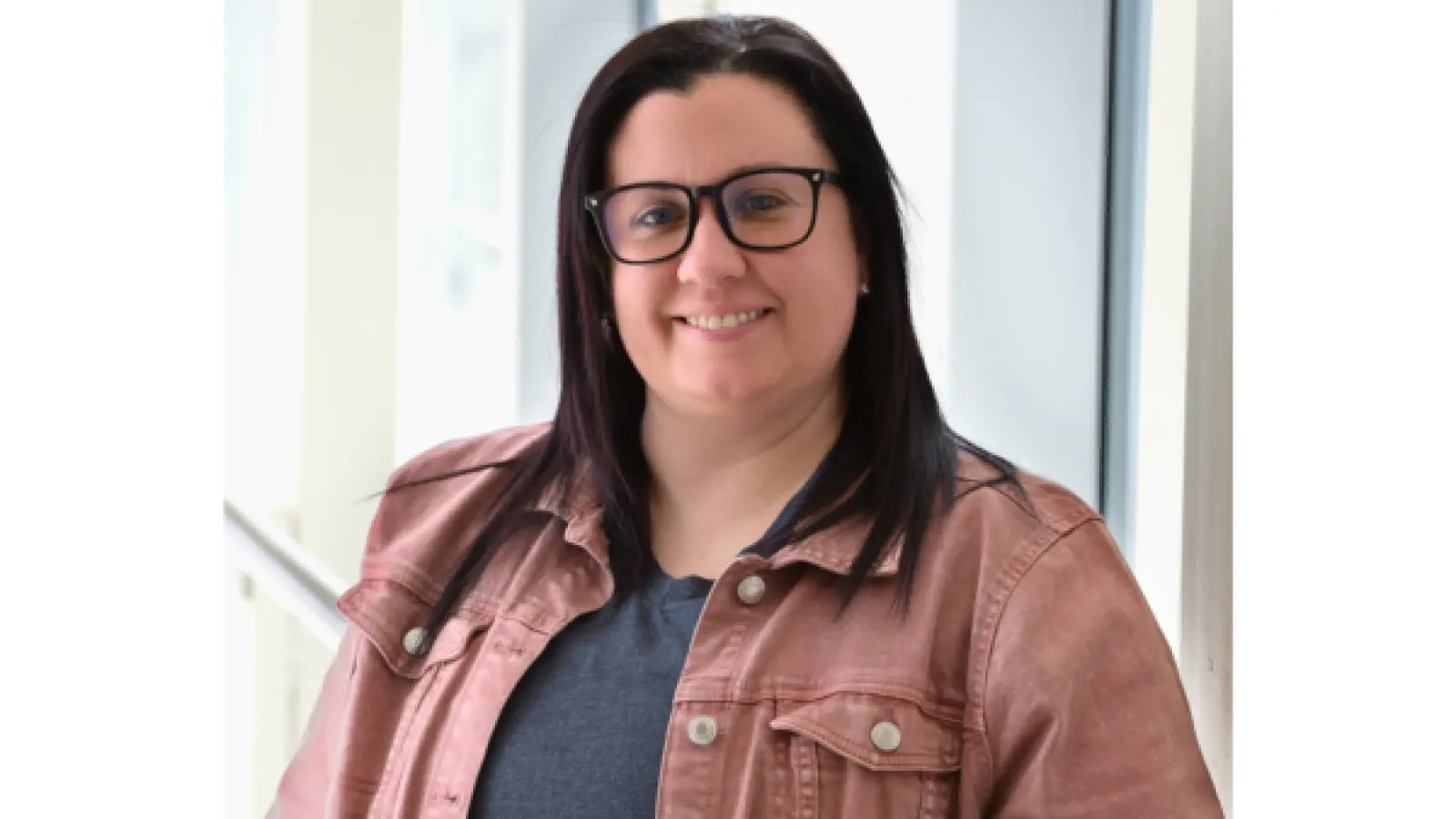
Colloquium: Rachel Henderson, Michigan State University
Building Tools to Assess Changes in Physics Education: Inclusively Supporting Student Learning and Retention
Event Details:
- Date: March 24, 2026
- Time: 3:45 - 4:45 PM
- Location: 1080 Physics Research Building
- Faculty Host: Geraldine Cochran
Abstract
As educators, we would like to prepare our students for 21st century physics careers. Overall, to ensure all students will become successful scientists, physics departments need to be able to provide evidence to make sure that we are reaching these goals. The field of Physics Education Research has made major contributions to various educational practices and materials to reform instruction in order to recruit and retain more students. However, while many research-based instructional strategies in physics have continued to advance, reform in undergraduate physics assessment tools has had limited space in these conversations. In this talk, I will motivate the need for the next generation of physics assessment tools and present a few projects that my physics education research lab at Michigan State University has been working on. In particular, I will discuss our efforts to build a more diverse set of tools to use within our classrooms in order to better understand our students’ learning as well as how we can best support them throughout their time in higher education.
Bio
Rachel earned her Bachelor of Science degree in physics from Slippery Rock University in Pennsylvania. She then went on to do her graduate work at West Virginia University where she completed her Master’s and PhD in physics. Her dissertation work was supervised by John and Gay Stewart where she focused on the gender inclusivity of the commonly used physics assessments - the Force Concept Inventory, the Force and Motion Conceptual Evaluation, and the Conceptual Survey of Electricity and Magnetism. In 2018, she moved to Michigan where she did her postdoctoral work in collaboration with Danny Caballero in the Physics Education Research Lab at Michigan State University. During that time she focused on developing formal structures to support the newly transformed physics laboratories while developing assessment tools and practices for understanding student learning within these courses. In 2020, Rachel was hired as an Assistant Professor at MSU where she is jointly appointed in the Department of Physics and Astronomy and the CREATE for STEM Institute. Generally, Rachel is a quantitative methods researcher who focuses on developing and implementing inclusive and equitable assessment tools that can be used to improve the learning and retention for students seeking Bachelor’s degrees in STEM. She has served as a member-at-large for the APS Topical Group on Data Science and the APS Topical Group on Physics Education Research. She has also served as the chair of the American Association of Physics Teacher Physics Education Research Leadership and Organizing Council (PERLOC). She is currently a member-at-large for the Eastern Great Lakes Section of APS, a Editorial Advisor on the Physical Review Physics Education Research (PRPER) Statistical Modeling Review Committee (SMRC), and an evaluator of the APS Gender Inclusive Physics Community conferences