Community and Workforce Development
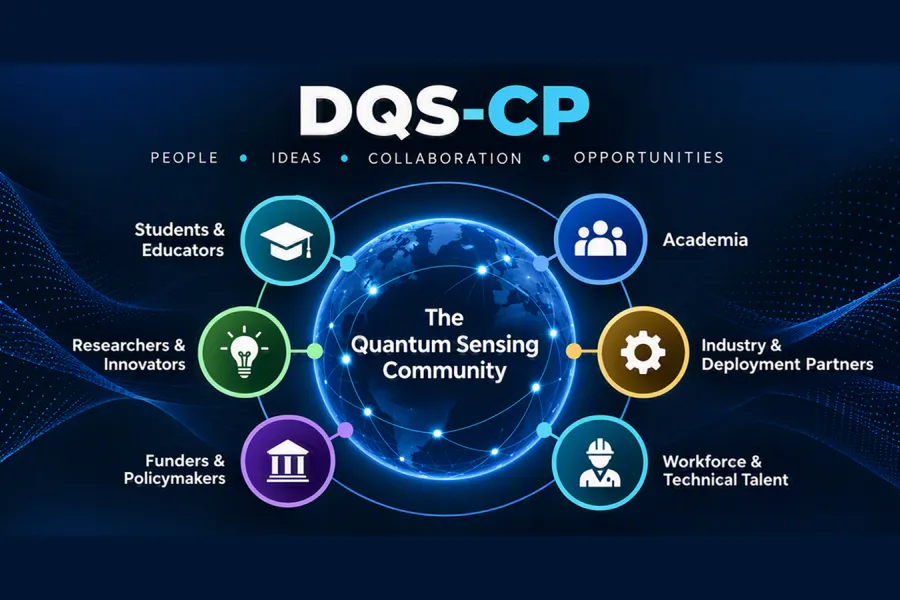
Community Engagement
How the Community Sets Direction
In July 2025, 61 participants from universities, companies, national laboratories, and federal research centers met in Boston for a two-day town hall spanning chemistry, biology, materials science, geology, engineering, and physics.
They picked the sensing targets where quantum advantage could be shown within eight years and set three principles the program still works from:
- Co-design with end users
- Quantum advantage judged at the system level, rather than the sensor alone
- Closing the training gap that keeps early adopters outside physics from using these tools
The roadmap they produced is being prepared for publication with participants as co-authors. Town halls remain the mechanism for revisiting direction as results come in.
One question from 2025 stays open: who should be in this conversation but isn't yet?
If that's you, start a conversation →
Workforce Development
Quantum sensing will need people who can operate the instruments, not only people who can build them.
With QuSTEAM and QuantCAD, DQS-CP is developing interdisciplinary curriculum modules, hands-on summer school experiences, and practicum placements across the consortium.
The programming is aimed at chemistry, biology, and materials science students as much as physics and engineering trainees, since they are the ones who will adopt the technology first.
Companies interested in hosting practicum students or shaping curriculum: start a conversation →.
Student and educator opportunities will be posted here as programs open.