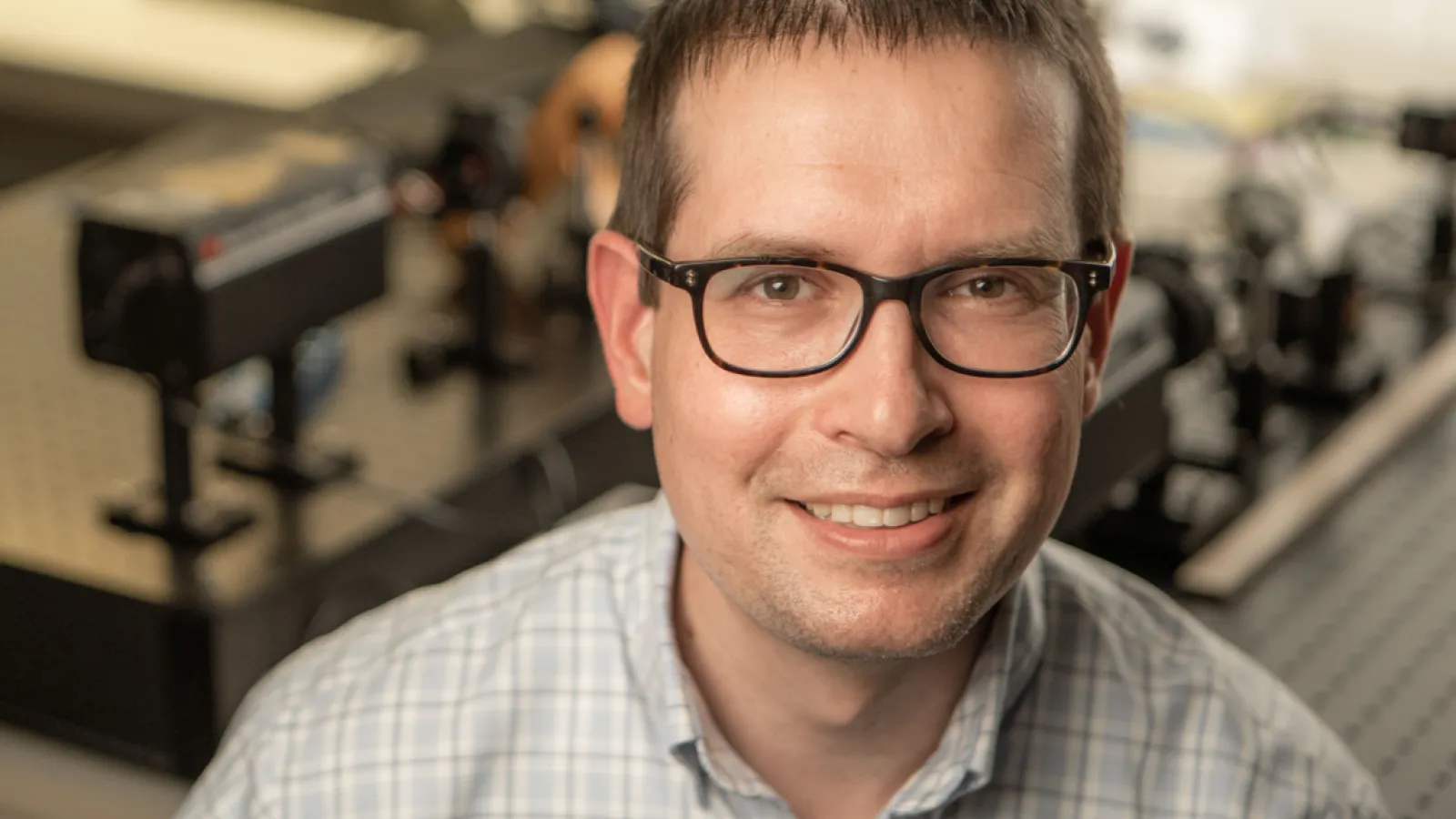
Colloquium: Ben Zwickl
Preparing students for a quantum future
Event Details:
- Time: 3:45 - 4:45 PM
- Location: 1080 Physics Research Building
- Faculty Host: Geraldine Cochran
Abstract
The rapid growth of quantum technologies has elevated quantum physics concepts into the national spotlight. The term “quantum” captures the imagination but also carries connotations that only brilliant physicists understand what it means. However, advances in quantum technology require interdisciplinary teams, and the commercialization of quantum products (computers, sensors, networks) expands the reach of quantum ideas even further. A collaborative team at RIT and University of Colorado Boulder has been examining the landscape of quantum-related education and career opportunities as well as the knowledge, skills, and abilities needed to succeed in quantum-related careers. Our team has reviewed course offerings from 1400 institutions, interviewed 75 managers and employees in the quantum industry, and is conducting an on-going analysis of thousands of quantum-related job postings. This talk will holistically consider these insights to identify opportunities for educational innovation that will improve understanding of this dynamic field and contribute to ongoing technical and scientific innovation in quantum technology.
Bio
Ben Zwickl is a Professor and Associate Head in the School of Physics and Astronomy and a member of the Physics Education Research Group at Rochester Institute of Technology. He is also an Adjunct Professor in the Center for Computing in Science Education at the University of Oslo. He received a PhD in physics doing experiments related to quantum optomechanical sensors, which was followed by a postdoc in physics education research at the University of Colorado Boulder. Since that time, Ben has pursued research on the nature of physics expertise, how expertise is developed, and the relationship between formal education and professional success. This has included research on graduate education, career preparation of physics majors, optics and quantum workforce development, and laboratory and computational education. Ben regularly teaches courses that integrate computation, laboratory work, and projects.