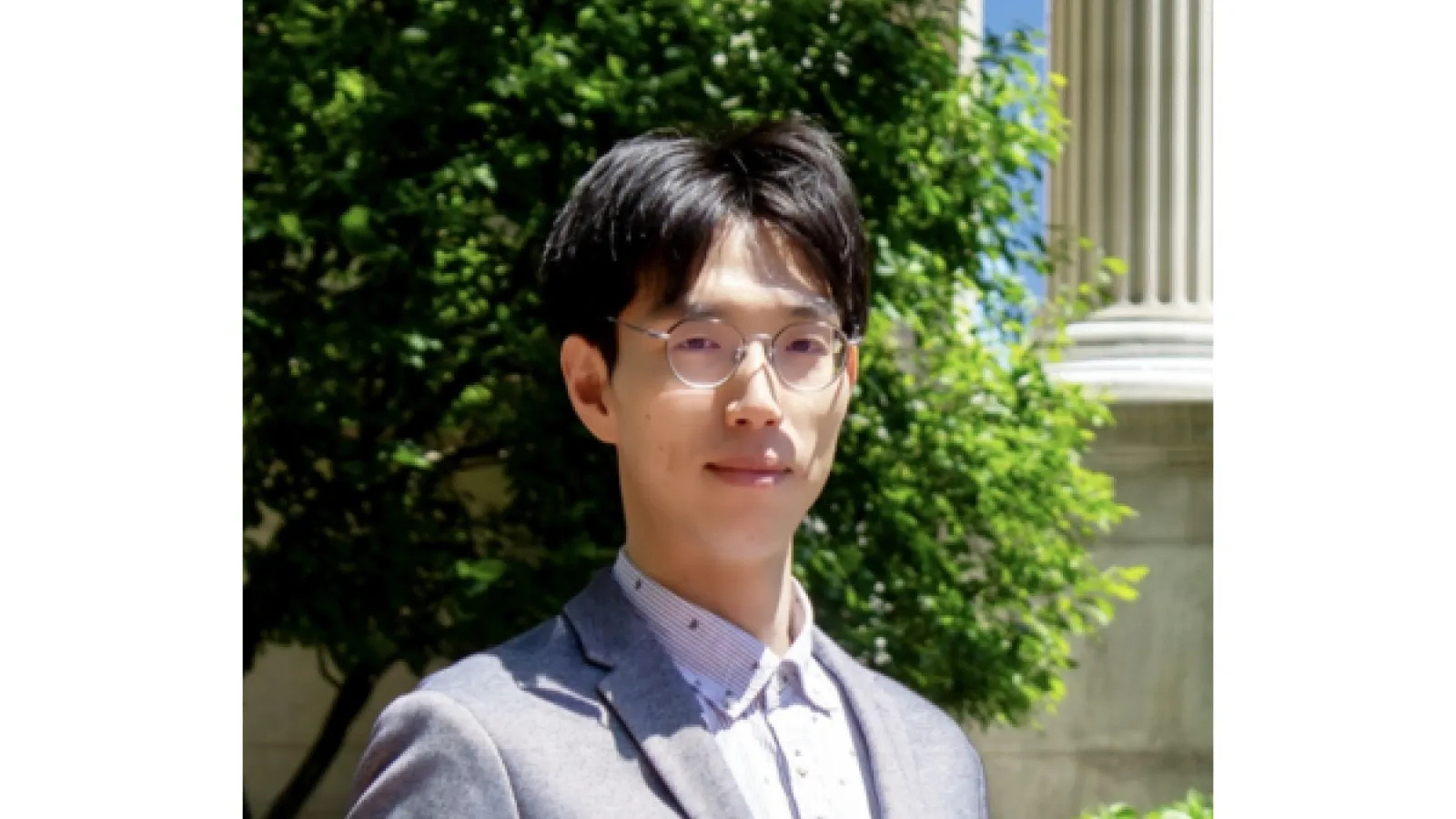
Colloquium: Ryota Katsumi, Columbia University
Engineering Light-Matter Interactions through Tailored Integrated Photonics
Event Details:
- Date: February 3, 2026
- Time: 3:45 - 4:45 PM
- Location: 1080 Physics Research Building
- Faculty Host: Mike Chini
Abstract
Quantum technologies are opening new frontiers in physics, enabling ultrafast computation and sensing with unprecedented precision. My research focuses on engineering light–matter interactions using integrated photonics to realize scalable quantum technologies.
In this talk, I will first show how tailored light–matter interactions enable deterministic single-photon generation for quantum photonic computing. By coupling semiconductor quantum dots to nanophotonic cavities, I demonstrate substantially enhanced light–matter coupling. I will also discuss how integrated photonics allows us to access new physical regimes and realize functionalities that are inaccessible in free space.
I will then turn to quantum sensing. In particular, I will demonstrate diamond nitrogen-vacancy (NV) center–based quantum sensors that combine high magnetic-field sensitivity with nanoscale spatial resolution. Finally, I will describe how nonlinear photonics on thin-film lithium niobate platforms can enable broadband generation of nonclassical states of light for quantum-enhanced sensing.
Together, these results illustrate how integrated photonics provides a versatile platform for controlling light–matter interactions, opening new pathways toward practical, chip-scale quantum computing and sensing.
Bio
Dr. Ryota Katsumi is an experimental physicist specializing in quantum photonics. He currently holds a dual appointment as a Research Scientist in the group of Prof. Alexander L. Gaeta at Columbia University and an Associate Professor at Toyohashi University of Technology. His research focuses on experimental quantum photonics, with particular emphasis on engineering light–matter interactions using integrated photonic devices.
His work aims to bridge the gap between solid-state quantum emitters and materials and cutting-edge integrated photonics to realize scalable interfaces for quantum computing and sensing. To this end, his research encompasses a wide range of fields, including cavity quantum electrodynamics, nonlinear photonics, and topological photonics.
Ryota received his B.S. in Physics from The University of Tokyo in 2016 and completed his Ph.D. in Physics at the same institution in 2021. Following his doctoral studies, he expanded his research globally, holding positions in both Japan and the United States.
He is the recipient of several prestigious honors, including the Inoue Research Award for Young Scientists and the Ando Incentive Prize, which recognize the top young researchers in Japan. On the international stage, he was selected as a Finalist for the Maiman Student Paper Competition at CLEO (2019), a premier distinction in the laser science community. He also plays a leading role in the field, serving as the Group Leader for Optica’s Quantum Optical Science and Technology Technical Group and as the Principal Investigator of a JST PRESTO project.