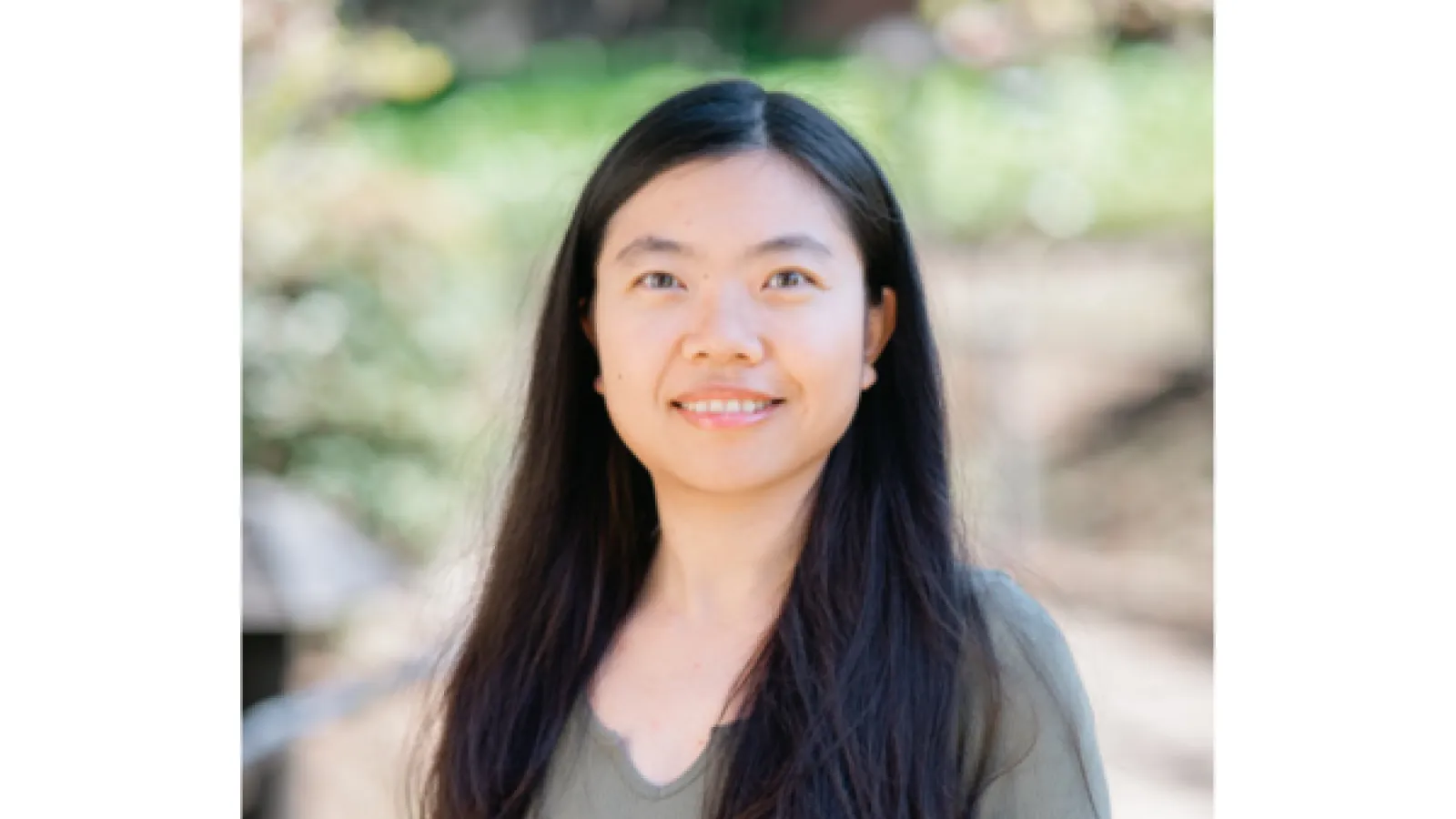
Colloquium: Miao Hu, Lawrence Berkeley National Laboratory (LBNL)
Probing the Void: the Electroweak Vacuum from the LHC to the Tabletop
Event Details:
- Date: January 22, 2026
- Time: 3:45 - 4:45 PM
- Location: 1080 Physics Research Building
- Faculty Host: Chris Hill
Abstract
The vacuum is not empty space. In particle physics, it is a physical medium defined by the Higgs ground state, shaped by electroweak symmetry breaking (EWSB) during a phase transition in the early universe. It sets particle masses and fixes the pattern of Higgs interactions. Understanding it is essential for understanding the fundamental laws that shape our universe. While the discovery of the Higgs boson confirmed the EWSB, the mechanism of it, the dynamics of the transition itself, and the detailed structure of the symmetry-broken ground state remain largely unexplored.
In this talk, I will present a program to probe these questions across complementary platforms from the Large Hadron Collider (LHC) to the tabletop. At the LHC, I will probe the electroweak vacuum through three pillars of the Higgs sector: (1) testing the symmetry-breaking mechanism using vector boson scattering (VBS); (2) studying how the vacuum couples to matter through the top Yukawa interaction, looking for additional symmetry structure that could help explain the matter-antimatter asymmetry; and (3) probing the dynamics of the phase transition by mapping the shape of the Higgs potential using Higgs-pair (HH) production. I will also show how the same fundamental electroweak structure can be tested at a different frontier, through angular-correlation measurements in nuclear weak decay enabled by tabletop quantum sensors. Together, the energy and precision frontiers form a unified program to stress-test the electroweak vacuum.
Bio
Miao Hu is a Chamberlain Fellow in the Physics Division at Lawrence Berkeley National Laboratory. She works on the ATLAS experiment at the Large Hadron Collider (LHC), focusing on precision tests of the electroweak sector. She also contributes to detector and instrumentation efforts, including upgrade of the ATLAS Inner Tracker strip detector for the HL-LHC and silicon-photonics R&D for future colliders. In parallel, she pursues complementary small-scale experiments that combine quantum sensing and silicon tracking technologies to probe related electroweak structure. Miao earned her PhD at MIT, where she worked on the CMS experiment on electroweak measurements and hadron calorimeter upgrade activities.