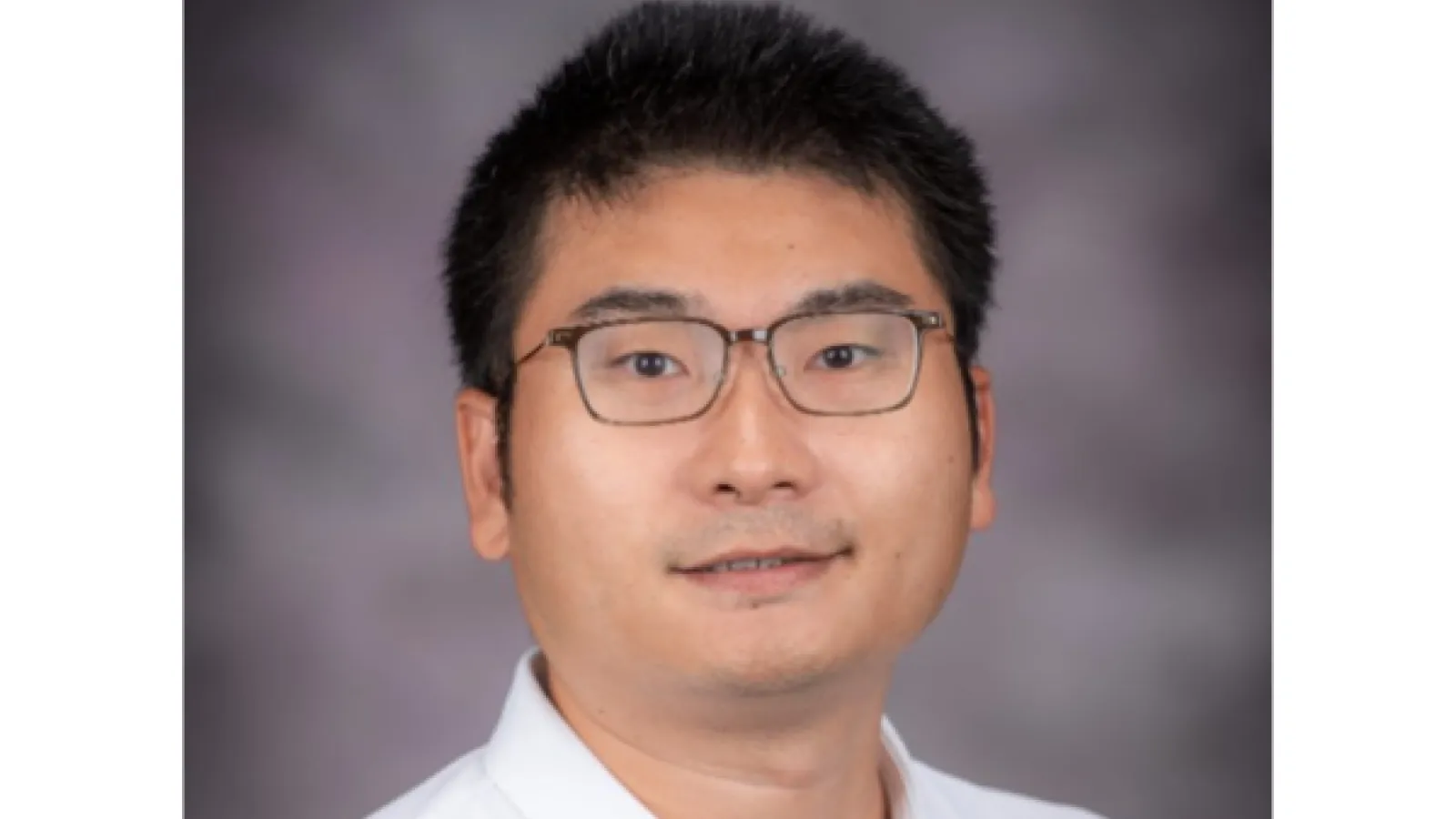
Colloquium: Meng Han, Kansas State University
Creating the shortest light pulses in the world
Event Details:
- Date: February 12, 2026
- Time: 9:00 - 10:00 AM
- Location: 1080 Physics Research Building
- Faculty Host: Sasha Landsman
Abstract
Generating ever-shorter and brighter light pulses has long been a central pursuit in ultrafast science, as it benchmarks our ability to create and manipulate the coherence on the intrinsic timescale of sub-atomic electron motion. The current state-of-the-art in attosecond pulse generation reaches durations of 40–50 attoseconds (1 as = 10-18 seconds), produced via high-order harmonic generation (HHG) driven by secondary mid-infrared light sources. However, these sources often suffer from low stability and poor HHG conversion efficiency. In this colloquium, I will talk about the generation of 18+-2 attosecond light pulses—a new world record for the shortest light pulse—driven by a post-compressed, industrial-grade Yb-based laser system. The resulting high-harmonic spectrum spans photon energies from 50 eV to 320 eV, covering the carbon K-edge, with a calibrated photon flux exceeding 10^12 photons per second, approximately three orders of magnitude higher than previous studies. The pulse duration was characterized using an angle-resolved photoelectron streaking camera on helium atoms and systematically optimized through the use of dielectric filters of varying thicknesses to compensate the attochirp. Our study breaks the threshold of one atomic unit of time (24.2 attoseconds)—the boundary between atomic and ionic physics—opening the door to resolving exciting ionic quantum dynamics with tabletop lasers.
Bio
Meng Han is an Assistant Professor at Kansas State University. His research focuses on experimental atomic, molecular and optical Physics, with particular emphasis on CEP-stabilized near-single-cycle laser technology and applications; short isolated attosecond pulse generation, characterization and applications; and air lasing, fluorescence and acoustic waves from laser-induced plasmas for remote sensing. Prior to joining KSU, Dr. Han was a postdoctoral fellow at ETH Zürich (Swiss Federal Institute of Technology, Zurich).