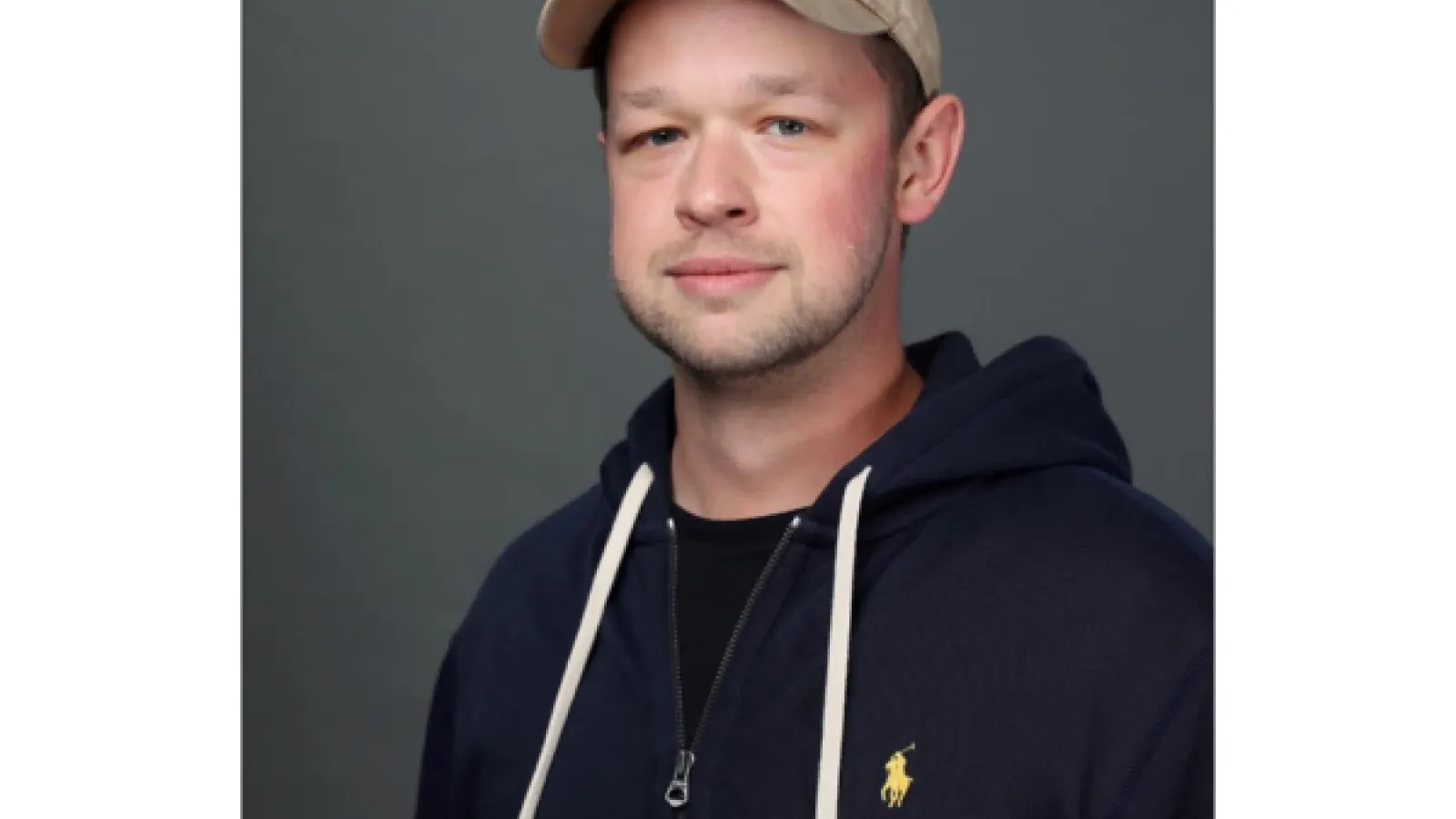
Colloquium: Leon Zaporski, MIT
Quantum-amplified global-phase spectroscopy on an optical clock transition
Event Details:
- Date: January 29, 2026
- Time: 9:00 - 10:00 AM
- Location: 1080 Physics Research Building
- Faculty Host: Sasha Landsman
Abstract
Optical lattice clocks (OLCs) are at the forefront of precision metrology, operating near a standard quantum limit (SQL) set by quantum noise. Harnessing quantum entanglement offers a promising route to surpass this limit, yet there remain practical roadblocks concerning scalability and measurement resolution requirements. In this talk I will introduce a recently discovered Rabi-type “global-phase spectroscopy” (GPS) that utilizes the detuning-sensitive global Aharanov-Anandan phase and borrows from the holonomic-quantum-gate concept. Marrying the GPS with cavity-feedback spin squeezing we were able to demonstrate quantum-amplified time-reversal spectroscopy on an optical clock transition which achieved directly measured 2.4(7) dB metrological gain, and 4.0(8) dB improvement in laser noise sensitivity beyond the SQL. To this end, we introduced rotary echo to protect the dynamics from inhomogeneities in light-atom coupling and implemented a laser-noise-cancelling differential measurement through symmetric phase encoding in two nuclear spin states. Our technique is not limited by measurement resolution, scales easily owing to the global nature of entangling interaction, and exhibits high resilience to typical experimental imperfections. We expect it to be broadly applicable to next-generation atomic clocks and other quantum sensors approaching the fundamental quantum precision limits.
(This talk will be based on the Nature article, "Quantum-amplified global-phase spectroscopy on an optical clock transition.")
Bio
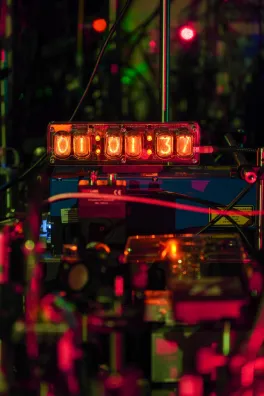
I am a postdoctoral researcher in the group of Prof. Vuletić at MIT, working on an optical lattice clock based on Ytterbium-171 atoms interfaced with a high-finesse optical cavity. Before coming to MIT, I studied at University of Oxford (MMathPhys ’19) and University of Cambridge (PhD ’23, Atatüre group), where I explored many-body dynamics and quantum feedback phenomena of nuclear spins, as well as coherence of a novel spin-photon interface: droplet-etched GaAs quantum dot.